

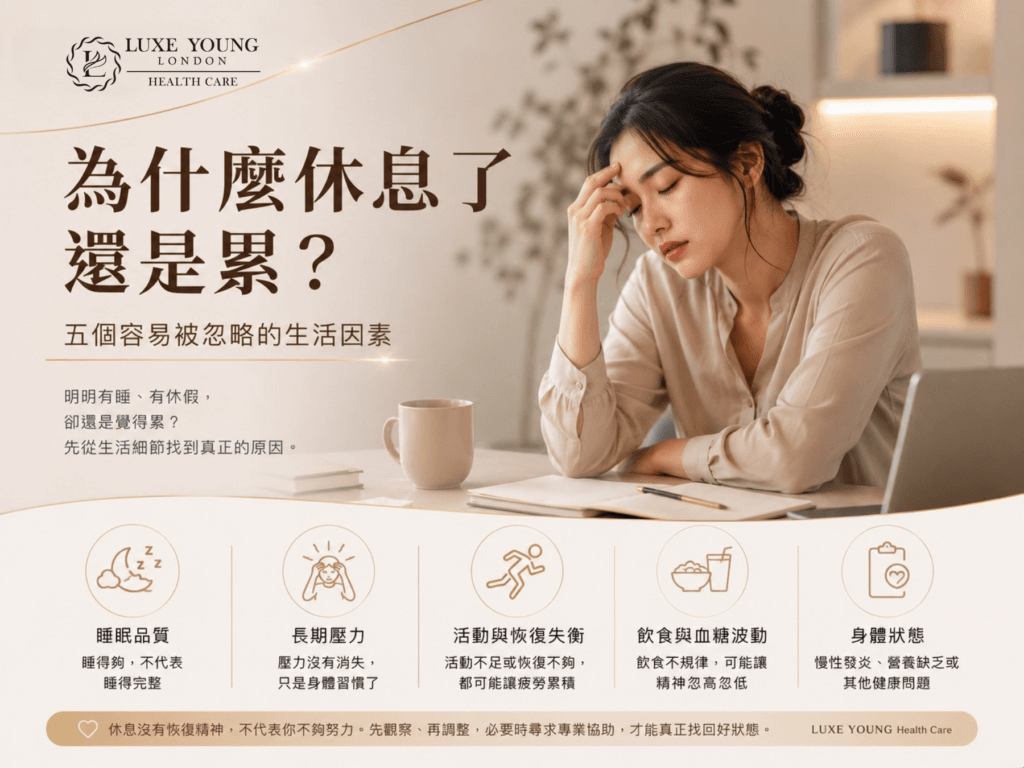
Some people are not lacking rest; rather, they are unable to return to an energized state even after resting. This type of fatigue may simply result from short-term sleep deprivation, but it may also be related to work stress, irregular routines, physical activity levels, diet, or underlying health factors that require further evaluation. The key is not to immediately label the cause of fatigue, but to first understand when it occurs, how long it lasts, and whether it is accompanied by other symptoms.
1. Getting Enough Sleep Does Not Necessarily Mean Getting Restorative Sleep
Sleep duration is only one factor. If you frequently wake up during the night, experience severe snoring, have irregular sleep schedules, or consistently lack sleep during weekdays and compensate with excessive sleep on weekends, you may still feel fatigued during the day. Caffeine, alcohol, working before bedtime, and smartphone use may also affect sleep onset and nighttime recovery.
Wearable devices and sleep tracking tools can be used to observe long-term patterns, but sleep disorders should not be diagnosed solely based on a single night’s score. If you experience persistent insomnia, loud snoring, suspected sleep apnea, or excessive daytime sleepiness, medical evaluation is recommended.
2. Stress Has Not Disappeared; Your Body May Have Simply Adapted to It
Long-term work stress, emotional tension, and high-demand tasks may make it difficult for the body and mind to truly relax, even when you are physically resting. Fatigue is not always expressed as sleepiness; it may also appear as reduced concentration, slower reactions, impaired short-term memory, and decreased decision-making ability.
HRV It can provide a reference for autonomic nervous system regulation and recovery status, but it cannot directly diagnose autonomic dysfunction. More meaningful insights come from observing long-term trends under consistent conditions and interpreting them together with sleep patterns, workload, alcohol consumption, exercise habits, and personal feelings.
3. Lack of Physical Activity or Insufficient Recovery After Exercise
Prolonged sitting can reduce overall physical activity, but suddenly increasing high-intensity exercise may also lead to accumulated fatigue. Health is not about pushing harder all the time; it is about finding the right balance between physical stimulation and recovery. For people with sedentary lifestyles, it is recommended to start with walking, stretching, and regular resistance training. For those who exercise regularly, attention should also be paid to sleep, nutrition, and adequate rest days.
If fatigue continues to worsen after exercise, or is accompanied by pain, palpitations, or breathing discomfort, avoid pushing through and seek professional evaluation.
4. Diet and Blood Sugar Fluctuations May Cause Energy Levels to Rise and Fall
Skipping breakfast, overeating at lunch, consuming sugary drinks, having dinner too late, or consuming large amounts of refined carbohydrates after a long period of fasting may all affect post-meal energy levels. Irregular eating patterns may also lead people to mistake dietary-related fatigue for simply not getting enough sleep.
If fatigue is accompanied by significant weight changes, frequent urination, excessive thirst, dizziness, or other persistent symptoms, lifestyle adjustments alone may not be sufficient. It is recommended to discuss with healthcare professionals whether further evaluations, such as blood glucose, insulin, thyroid function, liver and kidney function, or nutritional assessments, may be needed.
5. Fatigue May Also Be a Signal That Further Health Evaluation Is Needed
Anemia, thyroid dysfunction, infections, nutritional deficiencies, medication effects, and other health conditions may all contribute to fatigue. Chronic inflammation is also frequently discussed, but feeling tired does not necessarily mean the body is experiencing inflammation.HRV 或穿戴裝置也不能取代 CRP、ESR 等正式檢驗與醫療判讀。
LUXE YOUNG Health Care You may first use in-store HRV、InBody You may first use in-store assessments and needs interviews to help organize your current health status. If a deeper understanding of metabolism, nutrition, inflammation, or other potential risks is needed, related examinations will be performed by partnered medical institutions or qualified testing providers.
YishiiA Friendly Reminder
Not feeling refreshed after rest does not mean you are not trying hard enough. Observing your sleep, stress levels, diet, physical activity, and symptoms first — then deciding whether further evaluation is needed — is often more helpful than quickly attributing the cause to age or a lack of willpower.
Conclusion
Fatigue is a signal that needs to be understood, not a problem that can be solved with a single product. Starting with lifestyle tracking, and combining it with assessments and professional evaluation when necessary, can help identify the next steps that are more appropriate for each individual situation.
If fatigue has persisted for several weeks, is affecting daily life or work, or is accompanied by symptoms such as chest discomfort, shortness of breath, dizziness, palpitations, or unusual weight changes, medical evaluation should be prioritized. If you would like to first organize your daily sleep patterns, stress levels, and body composition, you may schedule a health management consultation.
延伸閱讀建議
References
- Centers for Disease Control and Prevention, NIOSH. Fatigue and Work. 2026.
- Centers for Disease Control and Prevention. Fast Facts About ME/CFS. 2024.
- World Health Organization. Self-care for health and well-being.
Health Information Disclaimer: This article provides general health management and wellness education information and is not intended as a diagnosis, treatment, or medical advice for any disease.LUXE YOUNG Health Care As a health management and assessment planning integration provider, we coordinate health management services and related assessments. Services involving medical testing, disease diagnosis, or treatment are performed by qualified partner medical institutions or testing organizations. If you experience persistent discomfort, acute symptoms, or are currently receiving treatment, please consult a qualified healthcare professional.